
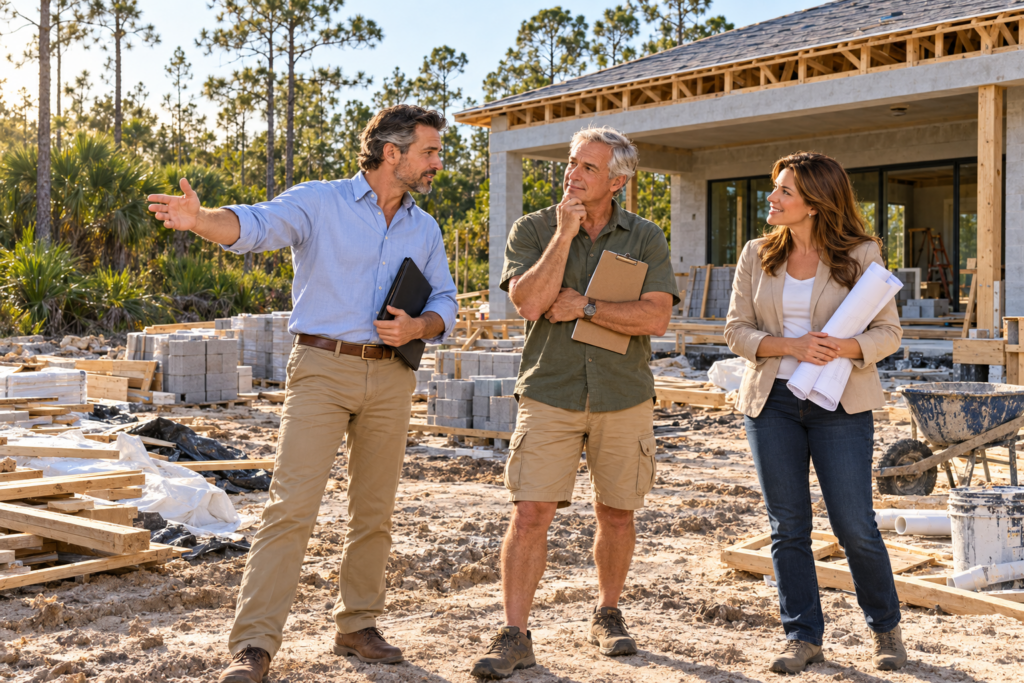
Having your own REALTOR® for new construction gives you someone focused on your circumstances, your questions, and the decisions ahead.
The builder’s sales representative may be knowledgeable, helpful, and wonderful to work with. Many are.
You still benefit from having your own REALTOR® because you need someone looking at the purchase through your circumstances, asking questions on your behalf, and helping you understand your choices before you commit.
The builder’s representative has a responsibility to their employer. Your representative’s responsibility is to you.
That distinction matters even when everyone gets along and wants the purchase to succeed.
Your REALTOR® and the Builder’s Representative Have Different Responsibilities
I enjoy working with good builder representatives. They know their homes, their company’s procedures, and how to get answers within their organization.
But being helpful does not mean they will raise every concern your own representative would raise or suggest every exception your representative might request.
Asking for exceptions also requires them to approach their superiors. Having a buyer’s agent bring forward a request gives them something specific to take to management on the buyer’s behalf.
A good working relationship can help bridge that gap. Your agent can explain what matters to you, make the request, and work with the builder’s representative toward an agreement.
One buyer’s experience illustrates how that can affect several decisions within the same purchase. I’ll call him Ted.
Look at the lot through your everyday life
Ted had retained me before buying new construction. He arrived at the model early and found a home and lot he liked.
When we walked the lot together, we looked beyond the floor plan.
Ted expected to enjoy sunsets, but trees would likely block the view. A culvert, fence line, and drop concerned me because his grandchildren would visit. The relatively flat grading behind the home also raised a drainage question worth investigating.
Then there was the lanai.
The home’s layout placed it where Ted would have more of a view of a cross street than he had anticipated. Another available property had full conservation behind it and a lower lot premium.
After considering the differences, Ted chose the other property. My impression was that avoiding the cross-street view mattered most to him.
These details were worth discussing because Ted would live with them long after the excitement of choosing a new home.
A requested deposit may deserve a conversation
The builder requested a 10% earnest-money deposit: $45,000.
Earnest money is deposited toward the purchase and credited at closing. My preference is to keep as little of a buyer’s money tied up in that deposit as reasonably possible.
Ted still had a home to sell. I explained why I wanted to reduce the amount committed upfront, including the money potentially exposed if something went seriously wrong and a default occurred.
I had worked with this builder before and knew it had previously accepted a $7,500 deposit. That gave me a basis for requesting $8,000.
The builder agreed.
Ted was shocked. He had not thought that was possible. Once he understood the reasoning, he appreciated having $37,000 less tied up in earnest money.
That did not reduce his purchase price or the total amount needed to complete the purchase. A smaller deposit also does not, by itself, establish the full extent of someone’s obligations under a contract.
It did give Ted a different arrangement from the one initially presented.
In my judgment, he was unlikely to know he could request it, and the sales representative was unlikely to volunteer that exception unless the purchase appeared to depend on it.
Knowing what to ask can matter.
Understand what the offer actually covers
Ted also understood that the builder’s incentive would cover all his closing costs.
Before he signed, we examined the figures. Approximately $2,000 remained uncovered.
I asked the sales representative to seek an exception from the appropriate decision-maker. The builder agreed, bringing the incentive into line with what Ted had understood.
The useful question is what an incentive means for your particular purchase. Which expenses qualify? What conditions apply? How much will you still need to contribute?
Ted’s existing home also needed a place in the plan. He was concerned about being committed to the purchase if that home failed to sell. We requested a home-to-sell contingency, and the builder agreed.
Both conversations started with his circumstances.
New construction deserves independent eyes
Ted’s independent inspections identified issues that needed attention.
That is another reason to discuss the process early. Ask about independent inspections, when they can occur, and how findings will be addressed.
A new home involves many people and many parts. Having your own inspector provides another opportunity to understand its condition and raise questions before taking ownership.
Choose Your REALTOR® for New Construction Before Your First Visit
My recommendation is to arrange representation before contacting or registering with a builder.
Builder policies vary, and the timing of your first interaction can affect whether the builder will contribute toward your agent’s compensation. Have your agent check the requirements early and explain the compensation arrangement clearly.
If you have already visited, have the conversation anyway so you understand what options remain.
Ted still lives in his home and loves the decisions he made. He describes my role as being the sounding board he needed.
His experience does not mean every builder will agree to the same requests. It shows the value of examining the property, understanding the commitments, and asking informed questions.
You choose the home and the terms you are comfortable accepting. Having your own guide helps you make those choices with a clearer picture of what they mean.